Category: Gluten-Free

Miraculous Rice-less Risotto with Ramps and Asparagus

   44 Comments

asparagusrisotto

I had no sooner returned to Denmark from Kauai, than had to turn right around, head to the airport and get on a plane to the Netherlands. Last weekend I was teaching my Green Goodness cooking classes in Amsterdam to celebrate spring and all verdant edibles. The icing on the cake was being invited by chef Schilo van Coevorden at the Conservatorium Hotel to collaborate on a tasting menu for his restaurant, Tunes. After working together in his spectacular kitchen, we came up with three dishes that would comprise the backbone for the tasting menu, as well as the meal served at the official launch and press event.

asparagusrisotto3

My favorite dish of all was a rice-less risotto. Chef Schilo is very much into taking seasonal vegetables and making “rice” out of them, simply by cutting them into grain-sized pieces. I had done this before at my raw food restaurant, but I had never tried cooking it before. Intrigued, we set out to make rice from white asparagus with a green sauce from blanched green asparagus and nettle. Combined with caramelized shallots, olive oil and some sheep’s milk cheese, it was a creative, light take on one of my favorite comfort foods.

Since I have an undying passion for wild leeks, also known as ramps, I chose to use those instead of the nettles in my version of the sauce. Ramps are popping up all throughout the forest floor here in Denmark, so they are an in-season treat that I love to forage for. Because they are from the leek family, ramps have an unmistakable allium flavour – stronger than cultivated leeks, but milder than garlic. You can use the whole part of the plant, but I like using just the leaves (easier to harvest!) in pesto, chopped up into salads, or folded into eggs. In this recipe, use just the leaves and save the little white bulbs for grilling, or use in place of onions or shallots in cooked dishes.

asparagusrisotto4

The Power of Spring Foods
This time of year we are entering new nutrient territory! That means fresh, seasonal foods with a whole host of vitamins, minerals and phytonutrients that we haven’t been exposed to over the long winter months.

asparagusrisotto2

Ramps contain quercetin, a plant pigment (flavanoid) that not-so-coincidentally helps combat seasonal allergies. It also acts as a powerful anti-oxidant, combating damaging free radicals that cause disease. Quercetin is anti-inflammatory, so it particularly helpful for arthritis and asthma sufferers. For anyone wishing to improve heart health and prevent atherosclerosis, high cholesterol, and circulation problems, include quercetin-containing foods in your diet (including onions, cruciferous vegetables, berries, and many nuts and seeds).

Asparagus, both white and green varieties, contain vitamin K. This family of chemically related substances collectively allows your blood to clot normally, protects your bones from fracture and postmenopausal bone loss, helps prevent calcification of the arteries, and provides possible protection against liver and prostate cancer. Research continues to evaluate the possibilities of vitamin K’s role in protecting against oxidative damage, regulating the body’s inflammatory response, and how it supports the brain and nervous system.

asparagusrisotto5

Tropical Chewy Granola Bars

   63 Comments

hawaiigranolabars
Returning home from such an epic holiday, sitting here at my desk in my apartment feeling a million miles away from anything tropical, there is a part of me that wants to say I’m getting “back to reality”.  But that would be inaccurate, as I believe that the island of Kauai was absolutely the realest place I’ve ever been. What do I mean by this? Well, I have never in my life been faced with more awe-inspiring nature, powerful energies, provocative weather, and life-challenging situations. It was the biggest dose of reality I could have gotten, anywhere.

hawaii2

I think the thing that struck me as soon as we left the airport was how low-key the island seemed. No huge high-rise hotels, no chain restaurants, no four-lane highways. Everything was pretty quiet and chilled out. And since the single, main road that winds its way along the coast of the island never actually connects to itself, this has kept things rather simple and undeveloped. Over 90% of Kauai is inaccessible by car, so Kauai tends to attract nature lovers who appreciate a raw, untamed, untouched environment and a good hike.

The first week of our trip, we were staying on the north side of the island, which during the winter and spring seasons receives a lot of rain. So much in fact, that our plans and high hopes of hiking the Kalalau trail were dashed by flash floods and washed out footpaths. We eventually did the first section of the trek, but the river crossing was so dangerous that we strongly warned from Mother Nature to turn back. Rains were rather relentless and some days were safest spent on high ground and indoors. I have never experienced such powerful weather – it was clearly to be respected!

hawaii8

We eventually found ourselves on the western side of the island trying to find some dry land and sunshine. Camping out on the beach was heavenly, until one night a sandstorm drove us out of our bliss and back in our cars for shelter.

hawaii4

But this is beginning to sound a bit complain-y, while I was actually having a total blast. Whether I was being pummeled by life-threatening waves, unrelenting rain, sand storms, or burning sun, my time on Kauai made me feel very connected to the environment, and so very alive. I loved feeling so small, so vulnerable, and at the mercy of nature (except when it got a tad scary). It was a reality check in the best way. Life was put back into perspective again, and I remembered that I am a part of a world so much bigger and more powerful than I can even fathom. Every second of that 38-hour trip was worth every second of that life-affirming, life-connecting feeling.

hawaii3

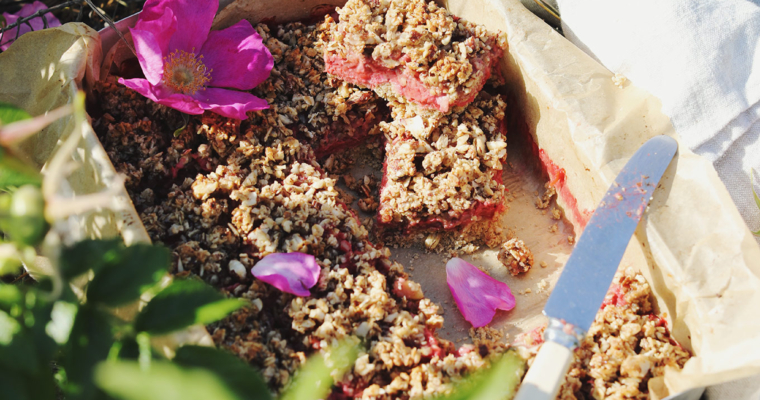
So, how do these granola bars tie into anything? You can imagine with the trekking and camping we did that there were a few energy bars consumed as they were the most convenient way of getting calories into us on the trail. We did find some rather high-vibe varieties, but I knew that as soon as I got back home I would make my own full of the delicious, tropical flavours. Mango, banana, coconut and macadamias were daily fare, and these form the base for my recipe. Finding the more unusual treats like noni, ice cream bean, soursop, Surinam cherry, breadfruit, and rambutan here in Copenhagen is slightly more challenging, so I stuck to relatively common dried foods you can all get your hands on, in paradise or otherwise.

These Tropical Chewy Granola Bars are a very versatile recipe and you can make several substitutions if you are missing some ingredients or aren’t into them. I used ripe bananas as the liquid binding agent, but if you don’t like bananas, replace them with ½ cup of applesauce. You could also use 2 eggs. Instead of the dried fruit I used, feel free to change it up: dried pineapple would be great, as would dates, cranberries, cherries, or raisins. Of course this will change the flavour a great deal, but if you want to adapt the recipe to the seasons and what is available, you most certainly can do that. Replace the buckwheat with oats if desired, the honey with maple syrup, the coconut oil with butter or ghee. And if macadamia nuts are unavailable, any nut will do – almonds, pecans, or cashews would be really good in these.

Even if you won’t be hitting a trail anytime soon, these granola bars will just as well on a spring picnic, biking around the city, or just an afternoon tea computer break. Because let’s face it: that’s about the only way I’ll be enjoying them for now. No complaints.

hawaiigranola3

As much it was nice to have a break from technology, I really did miss blogging and it feels good to be back in the swing of things. I have lots of good stuff up my sleeves for this season and I’m excited to share it with you all.

Lots of love from the un-tropics of Copenhagen,
Sarah B.

hawaii1

Mango Cashew Sunshine Bites

   74 Comments

sunshinebites1

Hello friends,
While I am away on holiday over the next few weeks, I will continue to post recipes just not full articles. Enjoy!

I made it. My bean dip and everything else has officially passed through security on all three legs of my journey to Kauai. I am writing this 30,000 feet above the blue ocean, about two hours (out of the thirty eight!) from our final destination. I have never been so excited to get off a plane in. my. life.

As promised, here is the recipe for Mango Cashew Sunshine Bites that I made for my trip. When we left Denmark there was an impending snowstorm with no signs of spring whatsoever. My body was beginning to crave new flavours and my excitement for the tropics took hold. I wanted to pack in as many fresh and exotic tastes as I could, and these little beauties are the result. I absolutely love the tang of lime and mango combined with the warm, mellow vanilla vibes and crunchy coconut. The cashews lend a creaminess and the salt acts as the perfect balancer. I also added turmeric to the treats for a nutritional boost, but this is totally optional. Keep in mind that turmeric has a very mild flavour so you will not taste it at all. Plus, it really makes the golden colour pop!

sunshinebites3

Although these are raw and more of a warm-weather treat, they are still a great snack to have around all year. And because they use almost completely dried foods, you don’t need to wait for summer to make them.

The only tip I will offer for this recipe is choosing the right kind of dried mango. Most dried mango has been sweetened to high heaven and preserved with sulfites of some kind. Look for organic mango if possible, but always read the label – even organic dried mango can contain organic sugar.

sunshinebites2jpg

I hope you all enjoy these as much as I have and that you don’t wait for a long trip to try them out!

Love and sunshine,
Sarah B.

*   *   *   *   *   *

Hello friends!

I am excited to announce the next My New Roots class in Amsterdam. See the flyer for reservations and information. Hope you can join us!

AMScookingclass


Recipes and Tips for Healthy Travel

   119 Comments

travel
If there is one passion I have beyond cooking and eating, it is traveling.
In just one week I will be on a plane with my husband, heading for the tropical paradise of Kauai. It has been a dream of mine for many years to visit this Hawaiian island, and since my best friend is currently living there, I knew that this was the perfect opportunity. The only bummer about this incredible dream coming true? Oh, the 38-hours it will take to get there from Copenhagen. Yikes.

Yes, I love traveling, but I am not a huge fan of the in-transit time. Hauling luggage around. Layovers. Crowded airports. Until I actually arrive at my destination, I have my blinders on and my head down in total survival mode. You’d think for someone that travels as much as I do I would be used to all the schlepping by now, but I don’t think I’ll ever be in love with the line up at customs. It’s just not happening.

One thing I have happily mastered in all of my travel experience is the business of food. Just because I am in survival mode doesn’t mean I am eating questionably edible, pre-packaged sandwiches from the vending machine. No way. When this foodie is on the road (or in the sky), she comes fully prepared from door to door!

I take great pleasure in preparing my food for trips, and although it takes a little planning, am I ever chuffed cracking open my Tupperware of thoughtfully made salad, crackers, dip, and dessert, while other passengers are munching on mystery meat. More often that not, I end up sharing my meal with my seatmates, as they always ask about what I have with me. This leads to many great conversations – sometimes new friends – and I bet I’ve convinced more than one person that raw chocolate is better than their mini candy bar.

I posted a picture of my in-flight meal on Instagram during my last trip to Lisbon and the response was surprising: you want to know what to eat on the go! I am very happy to share my easy-to-make recipes that travel well if it means you’ll avoid schwaggy snacks eaten out of desperation too.

Now, I know that the list seems really long, but keep in mind I’ll be in transit for over an entire day and a half! And I eat a lot. And the last time I checked there were no restrictions on how much food you can take on a plane, just what you take.

Here’s what I am bringing with me on the epic trek across planet Earth:

Rice and Beet Salad (recipe below)
Happy Crackers
sprouts
Roasted Garlic and White Bean Dip (recipe below)
carrot and cucumber sticks
dried fruit
banana and pears
Simple Gourmet Granola
Mango-Cashew Sunshine Bites (next post!)

Here is what I’ve learned about traveling with food.

1. Pack foods that don’t need to be refrigerated. This one is obvious. All of the above items are fine out of the fridge for at least 24 hours. Soft cheeses, meat, and melty things are not the best choices.

2. Pack foods that will maintain good texture. I chose to make this rice and beet salad because the veggies will maintain their freshness and crispness throughout my journey. I find that all plane food is pretty one-note when it comes to consistency: mushy! I like to crunch on my food, so packing carrot sticks, cucumber, bell peppers, apples, sprouts, rice cakes, and crispy granola are always a safe bet. If you are going to eat greens, stick to romaine. Spinach, butter lettuces, and mixed greens wilt and get soggy. Also, pack foods in a specific order in your containers. With the rice and beet salad, you’ll notice that the rice and beets are on the bottom, while the romaine and cilantro are on top. Mix them all together just before eating and they will maintain their crispness for sure.

3. Pack foods that are easy to eat. I find sandwiches do not always fit in this category. If you do make a sandwich, keep the fillings small and non-liquid-y so that they are not oozing all over you when you take a bite. Sometimes I like to take a wrap with me because I can roll it up in a piece of parchment, which prevents dripping. Oranges and grapefruits are a bad call because they often require a hand washing. Also, don’t take foods that require knives as you can’t bring anything sharp in your carry-on, and you may have to wait for the food cart to come around before you can get your hands on utensils.

4. Be considerate. No one wants to sit beside Mrs. Garlic n’ Onions. Smelly cheeses, curry, and cooked cruciferous vegetables can stink up an entire plane with the flip of a Tupperware lid. The bean dip I made uses roasted garlic, which is far mellower and less offensive than raw garlic. The beet salad is rather inoffensive as well – the main smell is mustard, but it’s very mild. If you know that you’re about to drop a stinky food bomb, be thoughtful and eat when everyone else is so at least your smells are covered up by everyone else’s meal.

5. Avoid liquids. This is a no-brainer these days, but if you are going to take any kind of dip through security, make sure it can be turned upside down and not budge – think mashed potato consistency. It also really depends on who your security team is and what city you are in. Sometimes I get my hummus through one airport but I’ll be forced to toss it at the next one. It helps if the dip is not in a container with a weight or volume measure on the side and if it’s accompanied with veggie sticks, as pictured. If all else fails, playing dumb, smiling ever-so-sweetly and begging are seriously effective tactics. Remember, this is survival.

The following two recipes are very simple yet have been thoughtfully created for traveling.

The Rice and Beet Salad supplies you with whole grains for fiber, beets for cleansing your liver if you do choose to have a mini bottle o’ wine with your meal, walnuts for omega-3, cilantro for pulling heavy metals out of your blood, and romaine lettuce for vitamin C to ward off the flu from the dude sitting next to you. This salad has a high water content to keep you hydrated, and feeling like a human being when you land, instead of a zombie. The  Roasted Garlic White Bean and Tarragon Dip is flavourful, high in protein and fiber. The roasted garlic won’t be as offensive as raw garlic like in regular hummus. It is also much thicker than regular hummus so that you can get it through security!

travel2

Prepare the salad and bean dip well in advance of leaving for your trip – the day before is ideal. You need to make sure all the ingredients are cool before you make both dishes, so that they will keep for many hours outside of the fridge. If they are warm when you leave, they may spoil en route.


Help with Jetlag
Jetlag is a serious bummer. When you finally get to where you are going and all you want to do is sleep is incredibly frustrating.

The secret to combating this very common affliction is staying hydrated and avoiding those things that cause dehydration. I’ll share with you my own little tips that get me through every time. In fact, I rarely suffer from jetlag at all.

1. Drink tons of water. The circulated air on planes is incredibly dehydrating. Drink as much as you can the day you are traveling before you get to the airport. Take a bottle with you on the plane and have the flight attendants refill it often, or ask if you can have their 2-liter bottle for long-haul flights. They usually give me one, as they find coming to my seat every hour to fill my bottle annoying.
For every hour you are flying, drink at least 500ml / 17oz. of water (I aim for double this). This sounds like a lot, but it helps more than anything else. Yes, you may have to pee a lot, but it’s good to get out of your seat anyway.

2. No alcohol, coffee or tea. Yea, yea, I’m a big party pooper, but I say this in your best interest. Alcohol and caffeine are also dehydrating, which will exacerbate any feelings of jetlag you may have. Save the celebrations for when you actually get to your destination instead of suffering through a jetlag fueled hangover. The worst!

3. Limit or avoid the plane food. Meals on planes are heavily salted and/or sugared
because food tastes blander at high altitudes. To dilute both salt and sugar, your cells excrete water and send a thirst message to your brain saying they need more fluids. Wine does not help the situation. Nor does a cold beer, an iced tea, or coffee. Drink water on the plane only, and stick to high water content fruits and veggies. If you are going to be eating on the plane, order a vegetarian non-diary meal in advance – it’s your best bet!

Preparation for Coming Home
As a final detail, if you can plan ahead to your home coming, it will make the end of your trip a lot more pleasant. For my last meal at home I make a large pot of soup or stew and cook extra to freeze so that when I arrive back I have a meal waiting for me to heat and eat. It seems like a small thing, but when I get off the plane tired and needing a hot, nourishing meal, I know that there is one waiting for me when I get home without any fuss.

I hope that these recipes and lists of travel tips will help you on your next trip. Bon voyage! And I’ll see you when I am back from paradise…Peace out winter!