
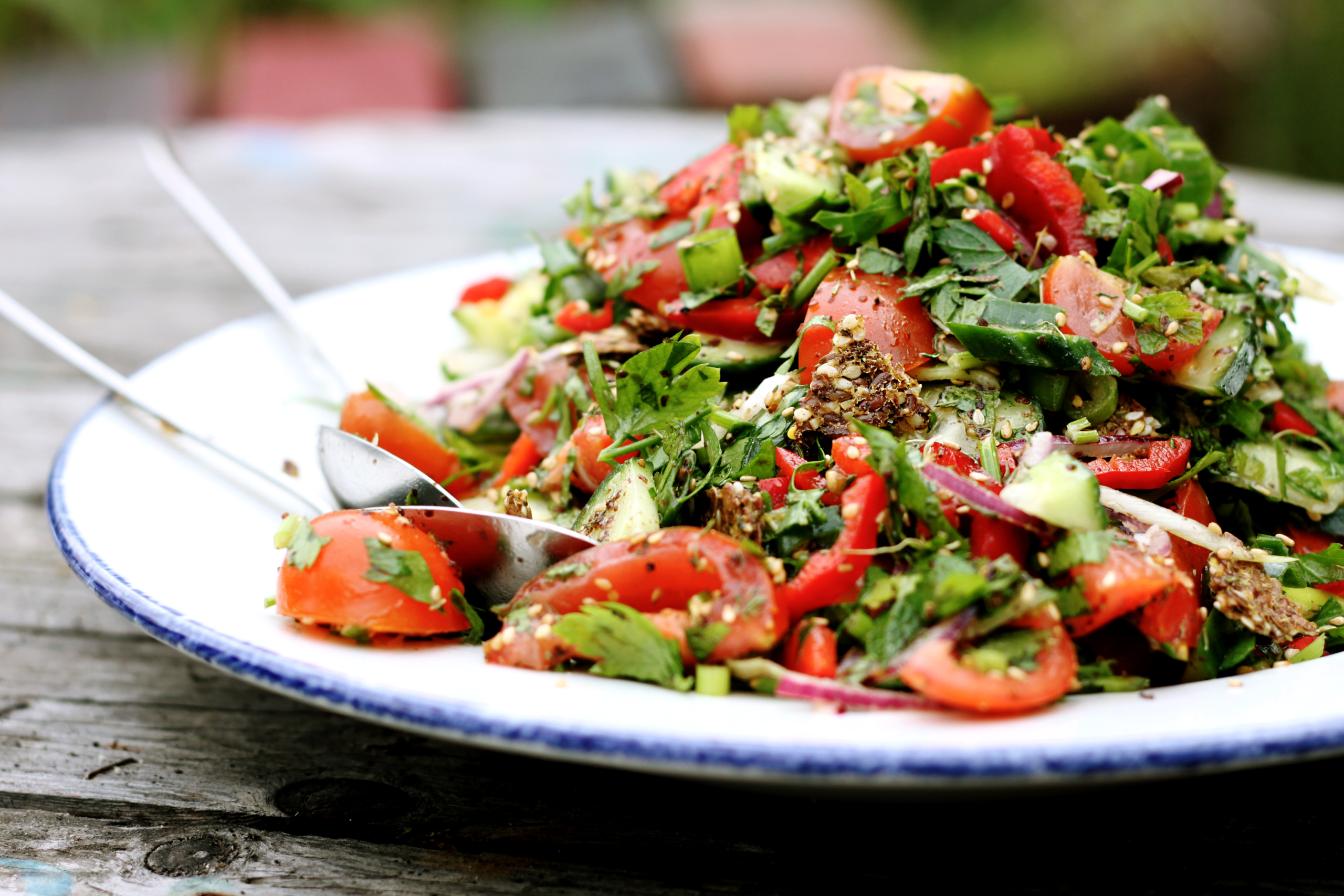
Fattoush is a salad for celebrating summer. Showcasing the season’s best produce, its high-water-content veggies get their cool on, while the herbs brighten things up with breezy greenness. Top it all off with a magical sprinkling of za’atar and you got yourself one major-flavour meal that puts your taste buds on the next train to fresh town!
Although it is a well-known Lebanese dish, I actually ate my first plate of this tasty delight in Los Angeles. My friends and I often patronized an off-the-cool-map restaurant in a strip mall because the food was really, really delicious (but also because we could all find something on the menu to suit us – not always the easiest thing!). The fattoush salad serendipitously arrived at our table one day (I can’t even remember ordering it) and lo and behold, I got a taste of the light. What is this incredible stuff?! So lemon-y. So herbalicious. So clean and cool and collectively crisp! And sprinkled with some very tangy red stuff that I later learned was sumac – pure love I tells ya. The whole thing is a plate of genius.
Fattūsh is derived from the Arabic fatt “crush” and the suffix of Turkic origin -ūsh. Coining words this way was common in Levantine Arabic. Fattoush belongs to the family of dishes known as fattat (plural of fatteh), which uses stale flatbread as a base. In this case, leftover pita is given a second chance as the main ingredient, but fattush also includes vegetables such as tomatoes, onions, cucumbers, radishes, and lettuce in addition to herbs like fresh mint and parsley according to the season and taste. For this reason, the ingredient list for fattoush may vary, and you will find different versions of fattoush throughout the Middle East.
Za’atar – Flavour Genius in a Bottle!
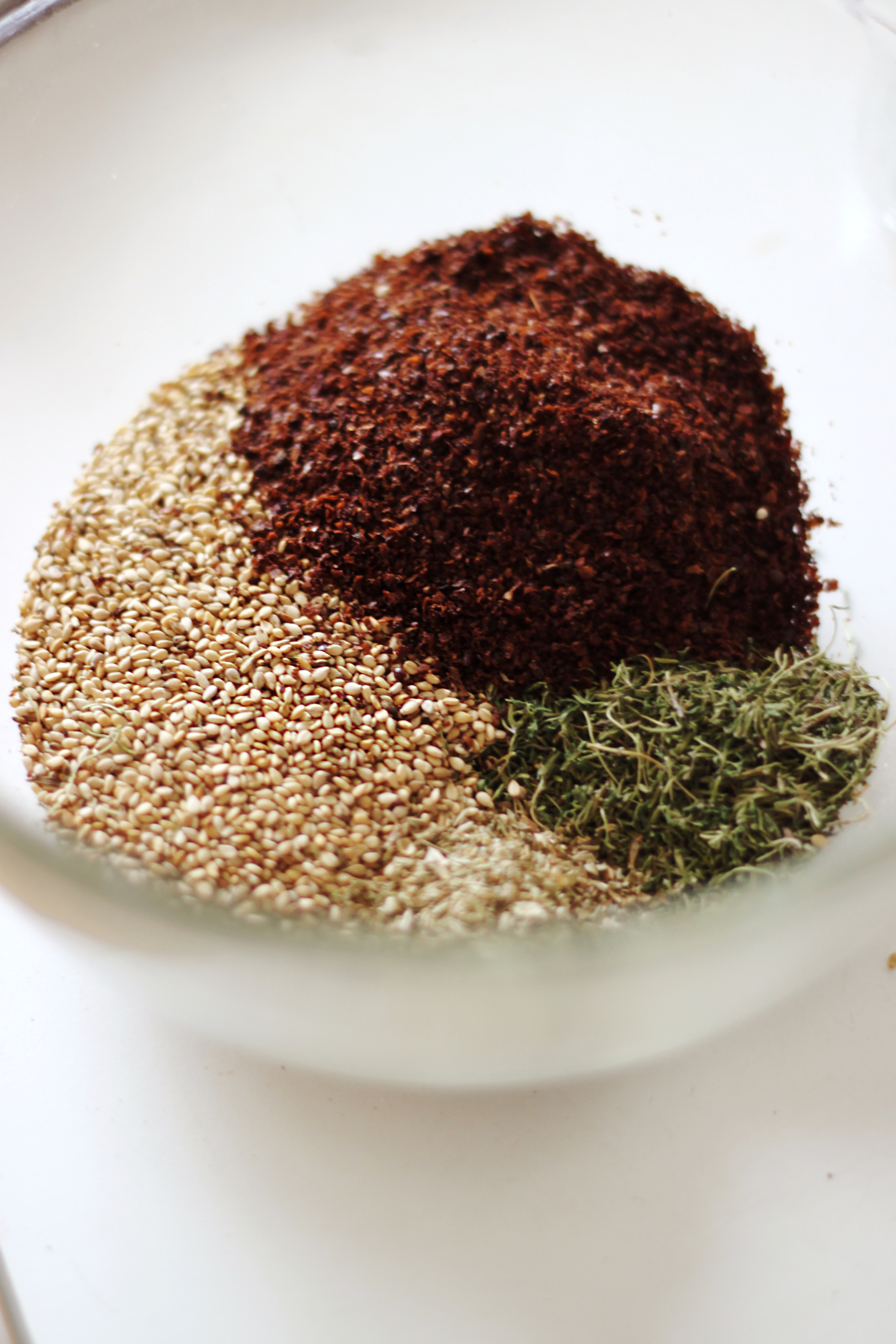
My favourite ingredient in fattoush however, is Za’atar. This spice blend is based on sumac (rhus coriaria), an herb that comes from the berries of a wild bush, which grows wild in the Mediterranean, especially in regions like southern Italy, Sicily and parts of the Middle East, notably in Iran. Sumac is an essential ingredient in Arabic cooking, as preferred to lemon for sourness and astringency. Not to be confused with its relative poison ivy (rhus toxicondendron) this variety is non-poisonous and has a dark red burgundy colour. When the berry is dried and ground to powder, it has a tart, sour, lemon-y taste. This is how you will see it in stores, in its ground form with a deep reddish brown colour. You can purchase sumac at most ethnic grocers, spice shops, and of course online.
Aside from just being a tasty treat, sumac has many delightful health benefits. For example, the deep pigments found in the berries are due to the high concentration of anthocyanins, which are the very special compounds that exhibit antioxidant action. Anthocyanins help to decrease the risk of heart disease and cancer. They may also aid in the prevention of macular degeneration by protecting the eyes from free radical damage, increasing circulation and stabilizing collagen structures (which hold tissues together). You can also find anthocyanins in foods such as blackberries, blueberries, black rice, grapes, and açaí.
Sumac herb can also help in the treatment of common digestive disorders, including stomach upset, acid reflux, constipation, feverish symptoms, and irregular bowel movements. It is believed to contain both antimicrobial and antioxidant effects.
As I mentioned earlier, fattoush typically includes a generous amount of pita bread, often fried in olive oil. This is to avoid the pita becoming soggy when it’s mixed with all of those delicious juicy veggies. If you’re gluten-free or avoiding fried foods, you can do as I have done and use raw flax crackers simply crumbled up to add some crunch and texture. Alternatively, whole grain flatbread or crackers, or simply toast up a pita instead of frying it (although that part is very delicious!). Whatever you choose, it’s essential to include a crispy, carb-y component to this salad, since it truly is the star of the show.
Also important to note – the herbs in this salad are not simply a garnish. As you can see from the amounts I’ve called for, they are in fact an integral ingredient to the traditional fattoush. Think of the herbs as you would lettuce, and remember that they too boost this salad’s nutrition profile, big time.
Fattoush Salad
Ingredients:
2 medium cucumbers, with skin
3 cups chopped tomatoes (I used a combination of cherry, plum, and grape tomatoes)
2 red bell peppers
1 large red onion
3 green onions
1 cup chopped flat-leaf parsley
¾ cup chopped mint
raw flax crackers, flatbread, or toasted pita
Directions:
1. Wash, prepare, and chop all veggies into bite-sized pieces. Wash, spin-dry herbs and chop. Place in a large bowl.
2. Pour dressing over salad, stir, and let stand for at least 30 minutes at room temperature to allow the flavours to meld.
3. Right before serving, sprinkle generously with za’atar, crumble raw flax crackers (or your crunchy topping of choice) and fold into salad. Enjoy immediately.
Fattoush Salad Dressing
Ingredients:
¼ cup extra virgin cold-pressed olive oil
¼ cup freshly squeezed lemon juice
zest of 1 lemon (organic, un-waxed if possible)
1 tsp. raw liquid honey or maple syrup
2 – 4 cloves garlic, minced
a couple pinches of sea salt
a pinch of black pepper
Directions:
1. Put all ingredients in a jar with a light-fitting lid and shake.
Za’atar
You can make a raw version of this amazing topping by using raw sesame seeds. But to really bring out the awesome nutty flavour in these little guys, lightly toast the sesame seeds in a dry skillet over medium-high heat until they start to pop. Remove from heat and let cool.
Ingredients:
¼ cup sesame seeds (raw or toasted)
¼ cup sumac
2 Tbsp. dried thyme
1 Tbsp. dried oregano
(This is a good “starter amount”, but feel free to double, triple, quadruple the recipe if you want more za’atar!)
Directions:
1. Combine all ingredients in a bowl.
2. Funnel into a glass jar and store in a cool, dark place.
After making my own za’atar, I’ve come to regard it as a real flavour booster for just about any dish! My favourite so far is sprinkling it on an avocado sandwich, but it’s also lovely with eggs, dashed on hummus, steamed brown rice with veggies, even on a savoury breakfast porridge – I kid you not. Throw it on your next meal and see how za’atar wakes up just about everything!


Just one note for Zaatar, it’s thyme (it’s oregano in some Arabic countries) please add this info thank you!
Love this combo! I always add some of my chimichurri sauce to zest it up.
https://www.thegoodhealthco.com.au/single-post/2018/08/21/Super-Green-Chimichurri-Sauce
My 1st thought was Marouche then carousel. I miss living by there. I rediscovered fattoush at handy market in Burbank and was looking for a recipe, so thank you! Will check back!
My husband is Syrian, so sometimes he calls me Fattoush or Lovoush and it sounds soooo lovely and lovingly from him! I knew it is name of delicious arabic salad, so one day I decided to google recipe and pressed on the most captivating photo in google images. That’s how I accidentally found your blog. Immediately I was fascinated by absolutely everything: by impressive photos, how can simple vegetables look so tempting and delicious; by the webpage design (for me wrapping is same important as what is inside it); by interesting, informative and at same time vivacious writing; by the idea that ALL recipes here are healthy even desserts! Since then I’ve made many many recipes from you, and discovered lots of new, extremely delicious tastes. I come from Lithuania, land of pork and potato, where rest of vegetables are in the backgroud, usually just as tomato and cucumber side salad. So for me, your blog was life changing as I’ve discovered that vegetables can be very delicious and even take main part in the plate. My husband is also happy to eat healthier versions of some middle east meals. Thank you, Sarah, for continuous education on healthier and tastier life for us!
There is so much nature has for us. This website gives the best of what nature has to offer. I try my best to read all your articles. This one is a great piece and lemon water benefits are very interesting.
Beautiful recipes and photos. Yummmm!
This looks delicious! My family and I love salads but are tired of the same-old-thing. This looks wonderful! I will probably add the superfood radicchio to my salad as it is full of antioxidants, dietary fiber as well as vitamins and minerals, but will leave everything else in the recipe the same.
Thanks again for sharing!
You probably could have saved yourself some controversy by mentioning that both fattoush and zaatar vary quite a bit country to country (and sometimes town to town), like so many emblematic foods of the Middle East (try defining the authentic falafel!). Or emblematic foods of any region or culture — think ragu Bolgnese or maztoh ball soup…. As for your recipe, the distinction of fattoush from other bread salads, i.e. panzanella, is the use of pita, the regional bread — the genesis of this type of salad is as a vehicle for stale bread. I have never even considered deep-frying, although I have often seen it panfried in olive oil — I just brush the pita with garlic oil or butter and toast it in the oven or on the grill. Sprinkle the bread with a little zaatar for added oomph! A quick cheat would be to buy those pita chips, which are also baked.
Just discovered your blog! You are very kind to post such wonderful recipes! I have one quick question…how do you pronounce ‘Za’atar’? I will be making some in the near future and I have the feeling my friends and family will be asking what that wonderful flavor is on the Fattoush Salad recipe. Thanks for a terrific site! 🙂
This salad is fabulous!!
Im so glad to discover sumac and looking forward to try it with avocado sandwich.
Congratulations for this beautiful recipe. Looking for Za’ atar for a long time now…and I have at last succeed in finding some ! Il love this salad and I ‘m going taste it as soon as possible
thanks for your recipe, I love the dressing! I mixed this recipe up a bit adding torn spinach and I fried my pita bread since I had hot oil at the ready from my fried eggplant. I served it with a Lebanese mezze, worked out lovely. your photos are beautiful!
Oh and I never knew sumac had such amazing health benefits! I eat it on everything (and literally my the spoonful)vso at least now I now it’s doing me so much good! 😀
I loovve fattoush! But my middle-eastern background make me somewhat an expert in what should and shouldn’t be included to be considered fattoush, i’ve never heard of zaa’tar being included in the mix, though some people I know use sumac. My my always uses pomegranate molasses which is oh so yummy and definitely my preferance, though yours looks de-lish! We usually skimp on the fried bread at home as well and just toast some Lebanese bread!
I agree with Bianca. In Israel Za’atar is made primarily with Ezov (Origanum syriacum – http://en.wikipedia.org/wiki/Origanum_syriacum).
As it says here http://en.wikipedia.org/wiki/Za%27atar Za’atar is usually made with the dried Ezov mixed with sesame seeds, dried sumac, salt, a bit of olive oil and maybe thyme.
And the pita is not deep fried but fried in a pan with olive oil and more Za’atar. It give the necessary crunch to the salad.
I grow Origanium Sryiacum in my garden, plus any other plants referred to as Zaatar.
Nothing beats making your own Zaatar blend from zaatar plants from your own garden.
You know your hungry when it’s 8am in the morning and you want to eat Fattoush salad.
Don’t ever associate this food with the settler colonial apartheid state of israel! They stole the food of the Palestinians, so please correct your comment to say Palestine.
love this salad!! and the whole blog of course… but about the zaatar, i had to say something. i´m Israeli (living in Brazil at the moment), and in Israel not only do we eat a looot of za´atar we also have it in the wild. i agree sumac is an important part of making the condiment, but it´s real base is a herb, very similer to oragano in form, but different in taste. in hebrew and arab we call it za´atar, and the mixed spice has the same name. that is probebly why there is a difference when tasting it in other places in the world.
Sumac herb can also help in the treatment of common digestive disorders, including stomach upset, acid reflux, constipation, feverish symptoms, and irregular bowel movements. It is believed to contain both antimicrobial and antioxidant effects. moving to london
Oh my goodness! Thanks for Sharing.. I tasted Sumac for the first time yesterday..cannot wait to make this salad.
Keep on Cooking!
Hey Kit,
Here’s the place: http://www.carouselrestaurant.com/locations.php
Make sure you try the fattoush salad (obvi). Enjoy!
Best, Sarah B
will you please, please tell me where this delicious menu can be obtained in los angeles? i thought i knew all of the good places–even the hole-in-the-walls and the strip mall locales–but i have yet to come across za’atar salads anywhere. the mystery is driving me nuts.
my family’s lebanese so za’atar tasted like home, and i miss those flavors like crazy!
I know this was posted a LONG time ago, but just in case you see it, there is a great Lebanese restaurant called “Fattoush” just off the Indian Hill exit on 10 East in Montclaire (right next to the Super King market). I LOVE it and the prices are very good.
Nom! I think I’m addicted! Made it once – loved it. Served to company – loved it again. Which is good, because I made too much and now I have the leftovers to enjoy 🙂 Although with company I served it exactly as suggested with Italian flax crackers crumbled in, tonight I enjoyed the salad with a lemon tahini sauce, some soft tofu for protein and a healthy dose of za’atar. Yum! Thank you! This will definitely be a staple as we enter the summer months here in Australia 🙂
Hey Kellis!
So great to hear that – thanks for passing on the goodness!
Love, Sarah B
I received LOTS of compliments after serving this on Friday night. Thanks for another healthy, winner of a recipe!
Saw this, loved it, made it, loved it even more, posted about it and linked to you! Just wanted to let you know. Thanks!
i wish i were handy and less lazy enough with cooking and housekeeping. i love food too much, but i’m always too lazy to prepare things. could you please spare me some leftovers of those on the table? i’m a hungry dog.
ANDWHATELSEISTHERE
SHOP
I love this post! So much usable information! BTW I love ur whole blog! I am counting down to make ur cheescake (just gotta find time for it)! Love the photos as well!
I love that salad, it is so delicious and fresh. Besides the ingrediants are healthy and could fit to any diet.
Greets holiday apartment london
It taste good I delight in it..thanks for this..
That first picture makes me want to jump through the computer and have a bite. This looks so deliciously fresh! I always love your recipes and photos.
yum Yum YUM!!!!!
i made this tonight! fatoush salad is one of my faves. my parents live in israel, and its one of the first things i want once i arrive! try it with shredded bulgarian cheese [not too much] and it is soooo good that way too. thanks for the recipe, it was a big hit. i love your blog. thanks for the service you provide!
I ate a lot of Za’atar when I lived in Saudi Arabia (I lived there for 7 years, when I was small, my parents & I were expatriats).
Lebanon people usually use it in pita bread, as you mentionned.
It’s so yummy !
This is perfect timing as we are having a bbq tonight and this is on the menu. Love it!
Oh my doesn’t that look amazing! I love the community feel in your photographs, they are so warm and fun. Keep the amazing recipes and photographs coming!
Wow, imagine being able to forage your own sumac! I’ve long made a tabbouleh salad with fresh pomegranate seeds instead of tomato.I think they’d be great in this fattoush too, particularly with the molasses.
Hi Sarah,
There is so much beautiful staghorn sumac around our place in the country near Collingwood, and I am tempted to branch out from sumac “lemonade” to try making za’atar. I’ve read that the middle east sumac is far superior in taste, but foragers can’t be choosers. I figure you can grind anything in a vitamix. I’ll let you know how it turns out (when it comes into season this fall). Thanks for the awesome salad inspiration!
Sarah, this salad looks fantastic!
Sarah, this sals looks fantastic!
I love fattoush- I’mm middle eastern so it was something we had a lot at my grandparents’ house when I was growing up! I also love the flavour of za’atar but I’ve never tried making it myself! I think now I really should!
xo
To Katherine: Choosing ONE book would be next to impossible! There are so many amazing resources out there…check out my list of cooking and reference books at the My New Roots Library: http://mynewroots.blogspot.com/p/my-new-roots-library.html
Happy Reading 🙂
Sarah B
Hey Friends!
Wow ~ what a response!
Glad you’re all diggin’ this. It is so easy and tasty and bright and will make your heart sing with summer.
To Gabrielle: Um, pomegranate molasses? That sounds in.cre.di.ble. I have actually been looking forward to making muhammara sometime this summer and I will certainly need some for that recipe. Great suggestion, thanks!
To Emily Lou: Start here! Get the recipes and ideas you need for making some changes in your diet. Start small and work your way up. Yes, I do eat whole foods all day every day. I have no appetite for anything less 🙂
Love to you all,
Sarah B
reading your blog makes me want to eat all natural all the time! you make it look so easy, but i honestly don’t know where to even start. do you eat non-processed foods for every meal?
that looks sooooooo good. I have to play around more with Mediterranean spices. In fact I think I need to learn a ton about spices. Love this 🙂
I’m so glad you did a post on za’tar. I just received a bag of it for my birthday (best gift ever), but wasn’t exactly sure what to do with it. This salad looks amazing, and I plan on making it PRONTO. Thanks so much. I love your blog!
Yum! This looks like my kind of salad, fresh and using the best seasonal ingredients – I love the pictures, too! Thanks, Chris
That first photo is just stunning! I’ve never had the pleasure of trying this – it looks bursting with flavour and freshness.
Yummmm is all I can say. Thank you for the delightful recipies.
What a beautiful recipe! Also, whenever I’ve eaten fattoush it’s always been sprinkled with pomegranate molasses, I suggest adding a few tablespoons of this delicious condiment for an extra tangy kick!
Thank-you for sharing all this info and insight! Your blog is always so delightful to read through. This recipe looks great and the health benefits of the key ingredients sound even better (definitely looking forward to adding sumac to my diet).
Curious to know if there is one book in particular that is your favorite reference, recipe and/or educational guide?
It looks delicious. I’ve never herd of za’tar and I love learning about new foods. Thanks for a great recipe.
Get out of my brain!! I’ve been playing around with za’tar recently and have been looking for ideas. Thanks so much!
What a lovely post! I love fattoush, and add za’tar to everything – from eggs to goat cheese to hummus. (My parents are from Beirut; that spice runs through my veins!). I just made tabouleh and za’tar-flecked hummus this weekend, so this post is timely. The photos are lovely and the salad looks delicious. Thank you!
http://5thandwaverly.wordpress.com/